
Why Goggles Fog Up | The Simple Science and Human Solutions to Staying Clear
You are participating in a swimming competition. Prepared hard to become a winner, all set to begin. But then, something you couldn’t expect happened. Your eyes are swallowed by milky cloud of blindness; your goggles betray you.
It’s frustrating. It feels personal. We all understand that having to wipe or vent our lenses is a headache. However, here is the good news. The cause of the fog is absolutely predictable. It is simple science and when you realize that, you can master it. Let’s dive right into why goggles fog up
The Simple Science of Fog
The condensation is what is referred to as fogging. It is what will happen to your mirror following a hot shower or to a glass of iced tea in summer. Think of air as a sponge. A humid air can contain a great deal of moisture. Cold air can’t hold much at all.
At warm, humid wind, the air immediately cools down at a surface of a cold object. Cold causes the vapor of water, the moisture, to condense. It reverts into small water droplets. The droplets gather on the lens. They are tiny. Therefore, they refract the light, causing the clear lens to appear in a smoky state. That’s your fog.
The Three Ingredients for Goggle Fog
There are three things that you require to obtain fog. However, you are providing at least two of them in most situations that involve wearing the goggles.
- Heat: This normally is provided by your body. It is that you are working, and you make heat.
- Wetness: This is provided by your breath, your sweat, and the humidity of the outside air.
- A Cold Surface: It is the inner side of your goggles lens. The surrounding (cold air, cold water, snow) cools it down.
Incidentally, when your heat and sweat/breath gets inside the small space of your goggles. The outside world keeps the lens on the cold side, you have just made the best small fog-making machine.
Fogging in Different Worlds
The reason is the same, yet the situation is different. Knowing which combination of heat and cold works best at your activity can be used to fight back.
The Swim Goggle Problem
The cold water is normally the external environment in swimming. The air that is pressed against that part of your face and the goggles heats up in a short time, due to the heat of your body.
Your skin is hot, the air in is hot and damp with a few tears in your eyes and the surface of the lens is always cold with the water of the pool.
It is an ideal, endless cycle. By stopping and drawing your sun glasses and letting the water droplets evaporate in warm air the fog is cleared. However, it only takes a moment to get them off again, and a blast of water will make the lens cool and the fog comes back.
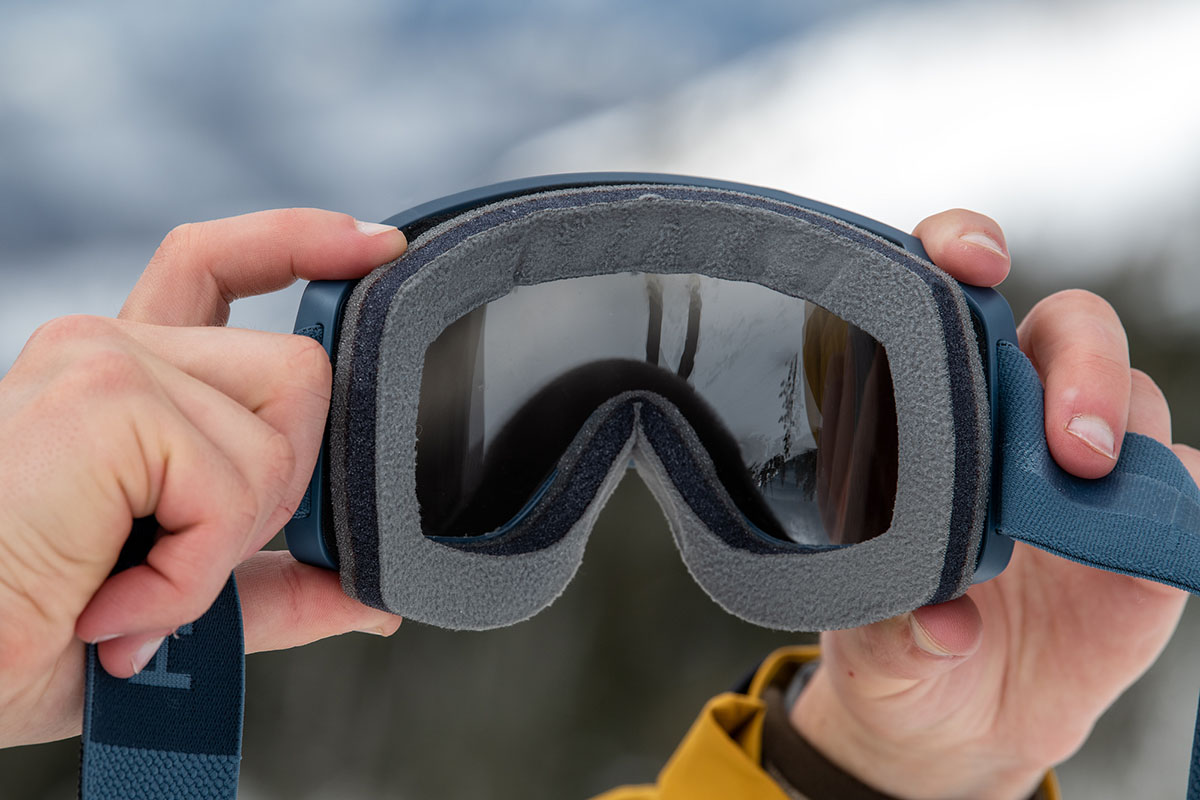
The Ski and Snowboard Fog
It is probably the most irritating kind of fog. You are putting forth gigantic effort, and it is frequently a cold day.
You possess a face mask, a helmet, and possibly a neck gaiter. You have been sweating heavily and your breath is blasting up directly on your face. You pause to have a breath and your goggles are useless. Here, the central one is trapped breath and sweat.
As soon as you cease to strain yourself the cold air rushes into the world, yet the warm, wet air of your face has no time to rush out and a cooler and damper atmosphere succeeds. The temperature of the lens decreases more rapidly than the temperature in the humidity. Instant white-out.
The Safety and Work Fog
A mask is frequently a cause of fogging in construction or laboratory work or industry.
You have a protective mask which closes around your nose and your mouth. However, you may attempt to close in the top, you will still find that a little warm, moist air of your breath still manages to get up.
It passes directly beneath your safety goggles. Once more, there is warmth, wet air against the cold lens. The temperature difference may be minimal in this case, whereas the humidity is very high.
This is a big safety vice and this is another obvious reason why goggles fog up. it has always to do with imbalanced heat and moisture.
How to Stop the Cloud: An Action Plan?
The laws of physics can never be changed, but the circumstances within your goggles can. The following are the actual human resolutions, which do work. Your polarized sunglasses will work well in most situations.
Focus on Ventilation and Fit
Goggles need airflow. A good pair of goggles is vented around the frame. You must have those vents clean.
- Don’t Tuck: NEVER put your balaclava, gaiter, or hat up or down in the bottom or top of your goggles. You are obstructing the vital vents. By stuffing cloth into it you are making a wipe in the sweat and a snare in the breath. Keep the vents clear.
- Don’t Notch-Up: When your goggles are smoothing out your face, then you are blocking the natural air flow to carry away humidity. They are not to be constrictive.
- The Helmet Gap: This gap should be not too big, but substantial. In the process of skiing there should be a gap between your helmet and the top of your goggles to permit the warm air to get away. This is called “brim venting.”
Respect the Lens: Use Anti-Fog Properly
Good goggles are those that have an anti-fog coating on the inside of the lens. This layer is not a repulsive one but a hydrophilic layer.
Rather than being subjected to the power of wind, water is made to diffuse in a thin transparent layer. It still has the moisture, and you can see through it.
- Never Wipe the Inside: Your finger or a rough cloth is the mother of death to anti-fog coating. In case you are in dire need to wipe the fog, shake the goggles slightly or rub with the corner of a very soft goggle bag. The coating is ruined by wiping inside.
- Use of Sprays: In case you have to use a spray, use a reasonable anti-fog solution. Avoid saliva or soap, they both work in short-term periods, but the remaining part damages the coating with time.
Be Proactive with Heat Management
You have to cool down the heat when you are working hard, before the fog sets in.
- During breaks: If you stop on the slopes, take your goggles off. Don’t just lift them on your forehead. Your forehead is hot and sweaty. It will instantly fill up moisture.
- Keep them off: When you take a break, put them somewhere cold and dry. Or just keep them hanging off your helmet. Let them air dry fully.
The Final Takeaway
The next time you wonder why goggles fog up, remember it’s just your own amazing body heat and moisture winning a brief battle against the cold lens. With a few simple habits, you can balance that battle and enjoy crystal-clear vision, every single time. If you purchase your products from Swans, it will help you solve all the problems.
FAQS
Why do my goggles fog up when I stop moving?
When you stop, the moisture-filled air (from your exertion) gets trapped. The outer lens stays cold, causing instant condensation when the warm, humid air hits the chilly surface.
How can I safely clean the inside of my foggy lens?
Do not wipe the inner lens, as this destroys the anti-fog coating. Gently shake the goggles to encourage airflow, or use a soft microfiber bag to blot only if absolutely necessary.
Is it okay to put my wet goggles on my forehead?
No. Your forehead is very hot and sweaty, immediately filling the lenses with massive amounts of hot, moist air, which causes severe and deep-seated fog when pulled back down.