
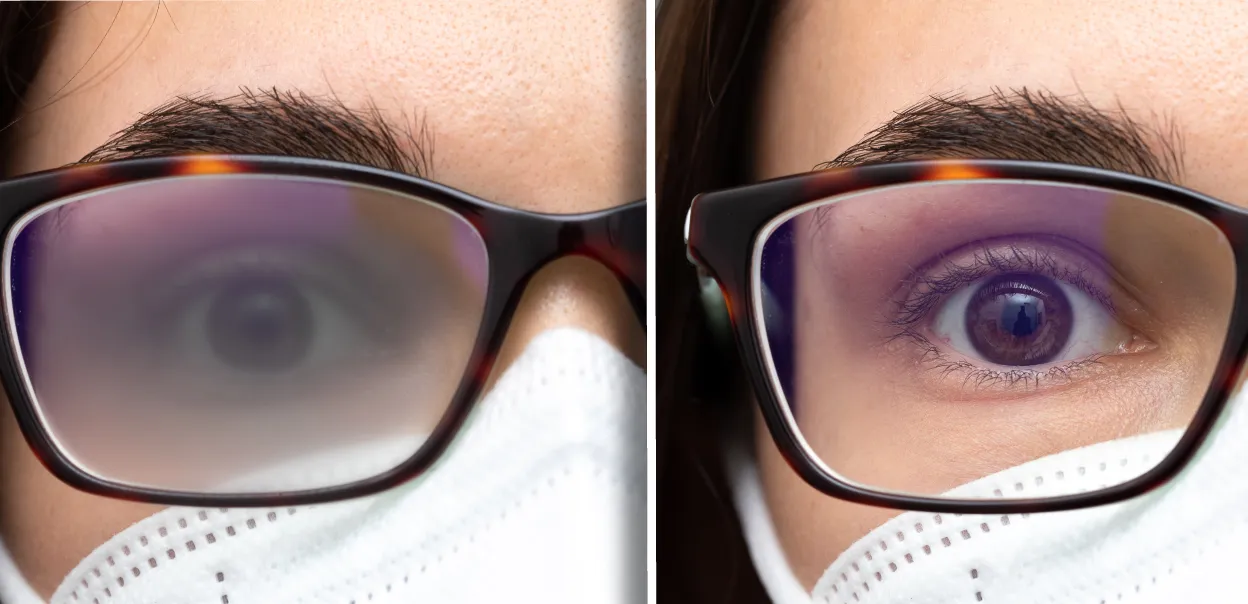
The Science of Clarity | Unpacking How Anti Fog Works
That sudden blur, which blocks the vision, is an everyday physics problem. Why? Condensation. Water vapor will immediately become drops when hot humid air (such as your breath) is exposed to a cool surface (like your glasses).
These tiny spheres reflect the light leading to the opaque haze. The whole genius of anti-fog technology is not the prevention of the water, but the transformation of its landing. It involves chemistry to make sure that the water flattens to be crystal clear. Want to know how anti fog works? In this blog we will reveal a simple and elegant solution.
The Core Problem: Light Scattering
In order to get to the bottom of the solution, we must have a closer look at the problem. A water bead is a small imperfect sphere, which is very small. When light hits a spherical surface light, rays are bent and scattered in all directions. It is only a fraction of the light that passes directly to your eye. The remainder is scattered away. Thus, causing the foggy diffuse light which is visible. Our goal is to get rid of that light scattering.
The Two Chemical Heroes That Fight the Fog
The key to having a clear vision is to apply a given type of chemical coating. This polysaccharide is a mediator that tells the water molecules to be dispersed and not clumped together.
1.The Basic Technique: Hydrophilic Mastery (The Spreader).
This is the workhorse of nearly all anti-fog products such as an anti-fog spray or an anti-fog lotion. The most important word here is hydrophilic which translates as water-loving.
- The Coating Job: The active component in the product- a complex polymer or surfactant mixture is highly soluble in water. When used, this clear chemical coating attaches itself to the lens.
- The Reaction: When water vapor collides with a typical lens, it attempts to play down in touch, creating beads of high-surface-tension water. The chemistry is inverted when it comes into contact with the hydrophilic coating. The coating draws the water to the inside causing the tension of the droplets to significantly decrease.
- The Result: The water is compelled to flatten and spread out immediately into an incredibly thin sheet of smooth and continuous water. This sheet is so thin that the light can straighten through it without being scattered. You still have water on the lens, but you see straight through it, no blur at all, just crystal clear. Widely used compounds in this case are cellulose derivatives or complex polyols.
2. The Supporting Role: Surfactant Action (The Tension Breaker)
The surfactants are molecules which resemble mini wedges between water molecules. They are found in soaps and detergents but they are also important ingredients in numerous anti-fog formulations.
Their mechanism: Surfactants consist of molecules with a two-sided structure. One end of the lens is drawn to the surface and the other end of the lens is drawn to water. They are very useful in breaking the strong binding forces that make water molecules stick close to one another and create a bead in the shape of a sphere.
The Power of Lowered Tension: The surfactant disrupts the tension on the surface of water and causes the droplet to expand and flatten on the water, which strengthens the hydrophilic effect. Such an amalgamation truly renders contemporary solutions that very strong and efficient. Consider alcohol ethoxlytes or other non-ionic surfactants of a specialized type. They are the silent heroes of pure foresight.
Permanent vs. Temporary Solutions
The anti-fog treatment market is divided into two huge groups, each having its use and duration.
A. Permanent Coatings (Applied in Factory)
Such coating is attached to the material of the lens throughout its manufacturing process. They are constructed to be durable.
Application Method: This is usually deposited through a clean space process, usually in the form of dipping, spin-coating, or plasma deposition. These are subsequently cured including with UV light to chemically bond the coating to the plastic lens.
Longevity: They have a long life compared to temporary sprays, often the lifetime of the product in case of proper care. They are applied to various safety goggles, diving masks, and high-price sports lenses made by Swans.
Material Science: These are usually based on specialized, clear polymers which are hydrophilic in nature. When they are cured they remain permanently attached to the lens structure. They are costlier to manufacture but have the best dependability.
B. Temporary Coatings (User Applied)
This is where your anti-fog lotion or anti fog spray enters. These are fast solutions made to repair or add the effect of permanent coatings.
- Formulation: They are more concentrated on the fast-acting surfactants and water-soluble polymers. They are simple to use and dry fast.
- Application Method: Spray with little application and wipe off the excess lightly. It is important to leave behind an invisible, microscopic film.
- Disadvantages: They are short-term. Moreover, cleanse themselves through repetitious water, sweat or rubbing. Excessive use may even result in streaking or hazing of its own, so application is very important.
From Factory to Field: Real-World Anti Fog
The technology is not a lab experiment but it is directly incorporated into high performance equipment. Take into account such a good brand as swans. When their swimming goggles are made, the inner part of the lens is coated with permanent and long lasting anti-fog coating.
During Manufacturing: The coating is baked on the lens in the manufacturing process to be chemical resistant and be able to resist chlorine, and pool chemicals.
The Wear and Tear: While resilient, the best factory coating may be worn out. The chemical bonds are destroyed by repeated wiping and especially a prolonged contact with saltwater or highly chlorinated water. That is why experienced swimmers also purchase an anti-fog lotion so that they can occasionally recharge their goggles.
The Quick Repair: The application of that exterior product will restore the hydrophilic characteristics on the surface. It is to make sure that warm water vapor condensing in the frigid goggle lens flatten instantly. In its absence, the process would make seeing under water almost impossible. It is because the temperature between your face and the water would seem like it is dramatic.
Beyond Goggles: Everyday Uses
The scope of how anti fog works is immense:
Vehicle Windshields: The modern cars employ special processes or ventilation, used to control the dew point. However special coatings are necessary in keeping camera lenses clean in driver-assistance systems.
Industrial Safety: Employees who wear respirators, face shields, or safety glasses use such types of coating on a daily basis. Fogging in factories is not merely irritating, it is also a significant safety issue that is capable of causing accidents.
Medical Devices: Surgeons and medical staff need perfectly clear endoscopes, laparoscopes, and surgical eye protection. Fogging during an operation is unacceptable, making high-grade anti-fog treatment a life-saving necessity.
A Small Change, a Big Impact
The distinction between a bead and a film is everything. A water bead acts like a tiny, distorted magnifying glass, scattering light. A sheet of water acts like a clean pane of glass, allowing light to pass through unobstructed. This elegant solution perfectly demonstrates how anti fog works. It’s a quiet innovation that dramatically improves safety and convenience across countless industries. So now you have clear understanding of how anti fog works.
Frequently Asked Questions
1.Is an anti-fog spray the same as a permanent coating?
No. Permanent coatings are chemically bonded polymers applied in a factory. Sprays are temporary, high-surfactant solutions you apply to restore the water-spreading, hydrophilic effect as needed.
2. Why do anti-fog goggles eventually stop working?
The thin hydrophilic coating degrades over time due to friction, repeated wiping, and exposure to chemicals like chlorine or soap. You can refresh the surface using an approved anti-fog lotion or spray.
3. Can I use regular soap as an anti-fog solution?
Yes, temporarily. Soap contains surfactants that lower water tension, causing the water to sheet instead of bead. However, it leaves behind an oil-based residue that can attract dirt and cause streaking.